DevOps training catalog: Kubernetes and Cloud

DevOps training by experts: Kubernetes, Cloud, security and agility courses tailored to your needs and customizable, in Geneva or at your premises, in French or English.

Designed and delivered by seasoned experts, our training courses are aimed at providing you with the skills and knowledge you need to succeed in your projects and day-to-day responsibilities.

🌟 Experienced specialist consultants: Our instructors are industry experts with extensive hands-on experience. They bring cutting-edge knowledge directly from server rooms and development teams into the classroom.

🧩 Customizable courses: We understand that every organization is unique. That is why our courses can be tailored to your specific needs and context, providing unmatched flexibility and relevance.

🏢 On-site delivery: Our instructor-led, in-person training approach—either at your premises or ours—encourages direct interaction with trainers and peers, creating an immersive and collaborative learning environment.

🇫🇷 / 🇬🇧 Training in French and English: We offer all our training courses in either French or English to best meet your needs and support multilingual and mixed-language teams.

📚/ ⚙️ Hands-on learning: Our training programs combine theory and practice through labs and demonstrations, with a strong focus on practical skills that can be applied immediately in real-world situations.

AI Foundation - Landscape

AI Foundation is an AI training course organized into several sections, covering essential topics in artificial intelligence. You will discover, for example, the current state of generative AI for code, application development with agent orchestration, best practices for AI-assisted development, and enterprise security.

Git

This training course introduces Git, the world’s leading version control system. Through a series of hands-on exercises and practical workshops, participants will learn Git’s core concepts and commands using a progressive, step-by-step approach. The course starts by demonstrating version control in a standalone, single-user environment before moving on to remote repositories and collaborative workflows, showing how teams can efficiently work together on shared projects.

Ansible

Ansible is a widely used tool among IT teams and one of the most popular tools for automating fleets of machines (physical or virtual servers, on-premise or in the cloud). Alternating between theory and hands-on labs, this training helps you understand how the tool works, its use cases, its ecosystem, and the associated best practices.

Terraform

This Terraform and Terragrunt training introduces Terraform, the well-known Infrastructure as Code (IaC) tool to build, change and version infrastructure safely and efficiently. This course contains many hands-on labs and quizzes, with a progressive approach that helps you learn the basics and the advanced concepts behind Terraform. The course starts with the benefits of IaC and Terraform, before exploring advanced concepts and deploying your own infrastructure on our lab environment.

Docker Containers

Docker training: containerization is at the heart of the transformation and orchestration of IT systems. This course explains the concepts behind Docker, how it works, and best practices for running it in production. This course includes many hands-on labs for building and managing containers.

Kubernetes

Discover our Kubernetes (K8s) training, delivered by expert consultants. Whether you are a developer, system administrator or architect, this course will help you master the fundamental principles of Kubernetes, gain hands-on expertise, and unlock the full potential of the platform. Our interactive teaching approach includes hands-on workshops and real-world exercises, including deploying a production-grade application.

SoKube is certified by the CNCF (Cloud Native Computing Foundation) as a KCSP (Kubernetes Certified Service Provider) and KTP (Kubernetes Training Partner)

Kubernetes Administration and Security

Discover our Kubernetes Administration and Security training, delivered by expert consultants. Whether you are a system administrator, SRE or architect, this course will help you master the principles of Kubernetes administration and security, gain hands-on expertise, and unlock the full potential of the platform. Our interactive teaching approach includes hands-on workshops and real-world exercises.

SoKube is certified by the CNCF (Cloud Native Computing Foundation) as a KCSP (Kubernetes Certified Service Provider) and KTP (Kubernetes Training Partner)

Cloud Native Applications

Cloud Native Applications (CNA) are applications designed and built for cloud environments, and specifically for containers running on Kubernetes. Getting the most out of these platforms requires strict practices that, on top of that, pair very well with DevOps. In this course, you will learn about the main concerns involved in developing and deploying cloud native applications in a Kubernetes environment.

GitLab CI/CD

This GitLab CI/CD training gives you advanced knowledge of GitLab and CI/CD, providing participants with comprehensive expertise covering workflow setup, implementing Continuous Integration (CI) and Continuous Deployment (CD), building shared libraries, administering dedicated views, and troubleshooting failed pipelines. Hands-on sessions cover advanced CI configuration, integrating automated tests, CI security, implementing Continuous Deployment/Delivery, third-party integrations with tools such as Slack, and finally monitoring, auditability and troubleshooting of GitLab pipelines.

GitOps with ArgoCD

This ArgoCD training gives you a foundational understanding of the concepts behind deploying applications or infrastructure using the GitOps approach. Implementation will be done using the ArgoCD tool.

Helm

This Helm training gives you advanced knowledge of Helm, letting you template and package your Kubernetes deployments and manage your applications’ lifecycle in Kubernetes. You will learn the concepts, structures and commands, as well as more advanced topics such as deployment strategies, using Helm with Kustomize, and CI/CD integration…

Grafana

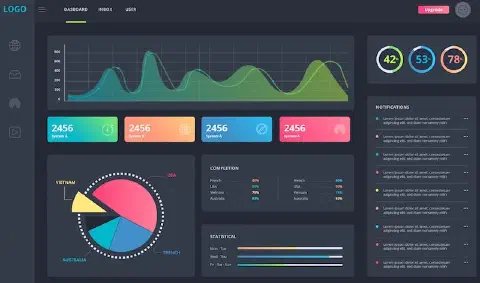
The goal of this training is to discover, understand and get hands-on with Grafana, the data visualization platform that is a key building block of any observability stack. It lets you build dashboards and graphs from many different sources, including time-series databases such as Graphite, InfluxDB and OpenTSDB. This one-day course covers the theory, but is mostly made up of hands-on labs that help participants grasp the different use cases so they can apply them to their own projects.

DevSecOps Overview

A one-day DevSecOps training to discover the DevOps & DevSecOps world. The main goal is to understand the new DevOps paradigms and principles with a focus on security, including concepts, products, tools and governance. At our training center in the heart of Geneva, we offer a course that will help you acquire essential skills in this fast-growing field. Our teaching approach emphasizes concrete, real-world feedback, giving you an immersive and relevant learning experience.

FinOps Microsoft Azure

The FinOps model is a cultural shift within the company. Different teams draw evenly on the data generated by the cloud to optimize costs related to operations. This course brings together the key steps needed for a continuous improvement process around cost control.

FinOps Google Cloud Platform (GCP)

The FinOps model is a cultural shift within the company. Different teams draw evenly on the data generated by the cloud to optimize costs related to operations. This course brings together the key steps needed for a continuous improvement process around cost control.

FinOps Amazon Cloud Services (AWS)

The FinOps model is a cultural shift within the company. Different teams draw evenly on the data generated by the cloud to optimize costs related to operations. This course brings together the key steps needed for a continuous improvement process around cost control.

Scrum Team Bootstrap

You have a product to build or a major evolution to deliver. You have a team ready to take on the challenge. You want to use the Scrum framework to get there, but your team doesn’t yet master it well enough. This training is for you. SoKube’s Agile coaches drew heavily on Scrum.org’s Scrum Master and Product Owner courses to design this course, which launches a team by using their own product directly as the class project. Students leave this training with a solid understanding of the agile mindset and the value of an empirical approach to solving the many complex challenges they will need to face.

Scrum Product Owner

There are many myths and misconceptions about the role of the Product Owner. Yet the Product Owner’s responsibilities go far beyond managing the Product Backlog and writing User Stories. The Product Owner is essential to connecting business strategy with product execution, helping the Scrum team build valuable products. In this two-day course, students will build and strengthen their understanding of the Scrum framework and the responsibilities of the Product Owner through instruction and team exercises. Students learn techniques they can use to help them overcome the challenges they often face day to day. They will do so while learning better ways of working with the organization, stakeholders, customers and their team to bring greater value to the delivered product.

Scrum Master

In this two-day course, students are invited to explore Agile and Scrum principles to better understand what they need to do when applying Scrum to support their teams and organizations. The course, heavily inspired by Scrum.org, is enriched with workshops and stories drawn from the experience of SoKube’s Agile coaches. The result is an engaging and enjoyable learning experience where students gain a deep understanding of Scrum theory and principles, the responsibilities of the Scrum Master, and why every element of the Scrum framework matters. Students leave this course with a solid understanding of the agile mindset and how to address common myths and obstacles to agility. They gain the knowledge and understanding needed to choose and apply the practices and techniques that will most benefit their Scrum teams.